






Anglers Against Pollution
Hidden nutrient pollution from leaking tap water is devastating UK ecosystems
The Angling Trust’s Water Quality Monitoring Network (WQMN) has revealed an alarming and often-overlooked source of pollution in UK rivers: phosphates from leaking tap water.
While chemical dosing of our drinking water prevents lead poisoning, a shocking 25% of all tap water in England and Wales leaks from pipes into the environment daily, unleashing an estimated 1,200 tonnes of harmful phosphorus annually – the weight of 100 double-decker buses.
This silent crisis is driving the eutrophication – where excess nutrients lead to algal blooms, dissolved oxygen depletion, and harm to fish and other aquatic life.
The Hidden Cost of Protecting Our Health
For centuries, lead pipes were the standard for water supplies. While their use in new plumbing was banned in the UK in 1970 due to the detrimental effects of lead poisoning on human health, countless old lead pipes remain in place. To make water safe to drink, orthophosphate is added to tap water, forming a protective layer inside these pipes and preventing lead from leaching into drinking water. This treatment is highly effective; public tap water meets high safety standards, and phosphates in these concentrations pose no health concerns for humans.
However, this temporary solution comes at an enormous environmental price.
Silent Killer: Leaks Unleash Massive Phosphate Pollution
The problem lies in the staggering amount of water lost to leaks. Around 25% of drinking water is lost to leakage from pipes – equating to approximately 40 litres per customer per day. This means the very chemical meant to protect us from lead is instead pouring into the natural environment and harming wildlife.
The WQMN’s alarming findings highlight the scale of the issue, with more than half (62%) of 60 tap water samples maxed out their phosphate monitors at 2.5ppm – the highest possible reading. Volunteers reported samples turning “bright blue,” a phenomenon typically seen only during the most extreme pollution events in natural environments.
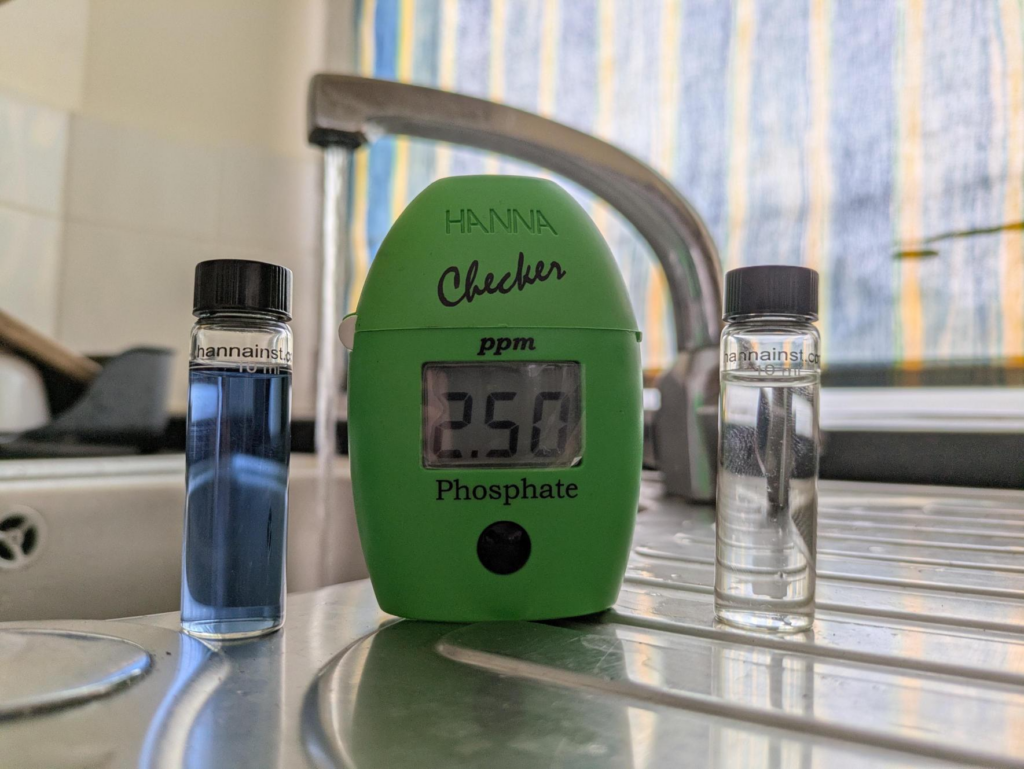
More than half of tap water readings maxed out phosphate monitors at 2.5ppm
In our latest annual report, the WQMN found that 34% of all river samples tested between July 2023 and July 2024 breached ‘good ecological status’ for phosphate concentration. While raw sewage and agricultural runoff are major contributors, leakage from pipes is a silent killer that has gone under the radar for decades, making significant contributions to nutrient loads.
A Centuries-Long Delay: The Failure to Replace Lead Pipes
Phosphate dosing is a temporary fix, not a long-term solution. The ultimate answer is the complete replacement of lead pipes. The UK water industry has made a “commitment” to be lead-free by 2050, but this is not a legally binding requirement.
Progress is shockingly slow:
- Despite companies like Thames Water replacing tens of thousands of lead pipes, the industry lacks a comprehensive mapping of how much lead piping they still own.
- At the current rate of replacement, water companies are on track to replace all lead pipes by the year 3273. This means we will have to wait another 1,248 years!
Urgent Action Needed to Replace Lead Pipes and Stop the Leaks!
The Cunliffe Review into the water sector recommended comprehensive mapping of water company assets, which must include lead piping, to understand the true scale of the problem and the investment needed.
Even with increased investment in lead pipe replacement, phosphate will continue to be added to our water for years to come. This makes addressing leakage an immediate imperative.
The Angling Trust demands:
- Stronger regulatory oversight and a drastic increase in investment to replace lead pipes.
- Clear, enforceable targets for reducing leakage and replacing old mains.
- Regulatory changes that shift incentives, making leakage reduction a requirement backed by penalties and rewards, not an optional public relations exercise.
The environment simply cannot wait the 1,248 years it will take at the current rate of replacement to have a lead-free water system. Investing in robust infrastructure and stopping leaks is not just an environmental necessity; it is a moral commitment to the long-term health of our communities and our natural world.
To find out more about this story, you can read in greater detail in our blog HERE
Support our Anglers Against Pollution campaign HERE
You might also like

What happens when a fishery reports a potential predation…
WQMN Group of the Month: Citizen Science, Anglers and…
Andy Burnham becomes Prime Minister: here’s what he should…

Anglers to play key role in landmark shark conservation…
New Report Reveals the Hidden Workforce Behind the UK’s…

Marine heatwave: what it means for sea anglers
Bluefin Tuna Catch-and-Release Recreational Fishery 2026
Rays of Tope: New project to unlock the secrets…
New ICES advice highlights mixed picture for key recreational…

Angling Trust welcomes UK ratification of landmark High Seas…
UK Government Pours Cold Water on Urgent Reforms to…