




Anglers Against Pollution
Government’s ‘once-in-a-generation’ water overhaul falls short of radical reform needed
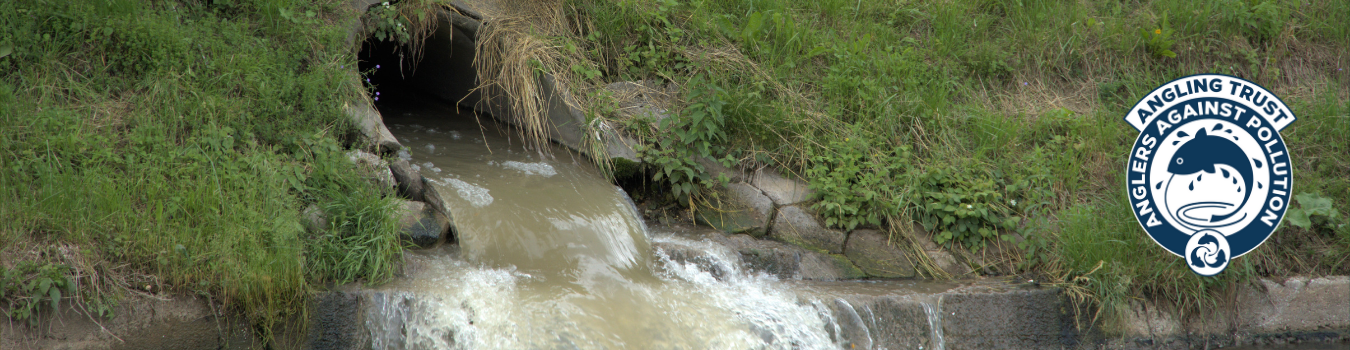
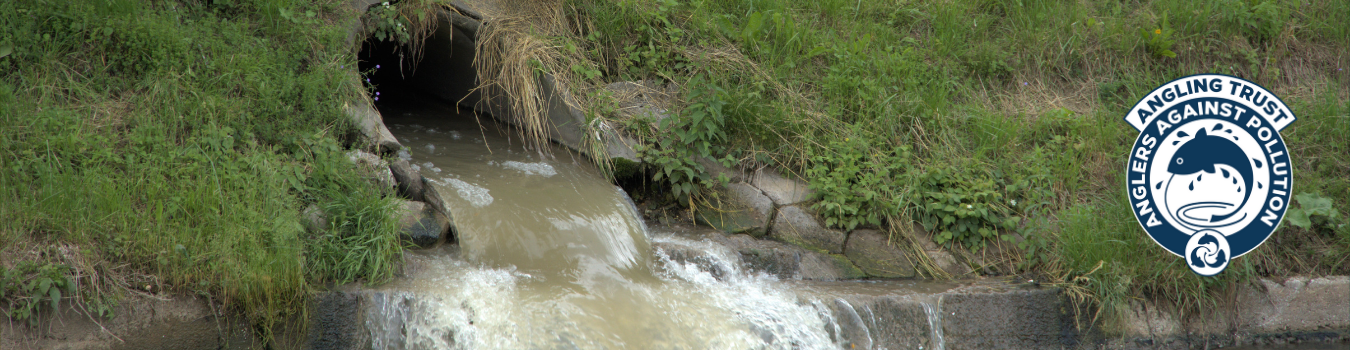
The Angling Trust and Fish Legal have warned that the government’s newly published Water White Paper fails to deliver the radical, environment-first reform required to fix a fundamentally broken system.
While the Trust welcomes the long-overdue abolition of Ofwat, it cautions that structural reshuffling alone will not clean up our waterways without the legal guardrails and ecological prioritisation the angling community has consistently campaigned for.
Six months after the announcement that Ofwat would be abolished, the Government has today confirmed that it will publish a transition plan at some point in 2026. The White Paper is clear that the 2029 water industry investment cycle (Price Review 2029) preparation is starting now and that environmental obligations will be set via the transition plan. Unless binding outcomes are locked in early, there is a real risk of another five years of regulatory failure, regardless of later legislation.
The process has also been less democratic than promised, and the Angling Trust and Fish Legal are disappointed that the White Paper was released without a consultation, as previously committed to, limiting the involvement of anglers in legislation that will affect the environment for years to come. Anglers play a leading role in monitoring, catchment delivery, and local accountability, and must be given a seat at the table in shaping their future, and that of the environment.
The Angling Trust and Fish Legal recognise that the White Paper’s commitment to creating a single integrated regulator, and to appointing a Chief Engineer to oversee crumbling infrastructure, is a step in the right direction and aligns with demands set out in the Trust’s submission to the Cunliffe Review. However, a structural reset opens the door to transformative change — it does not deliver it.
Jamie Cook, CEO of the Angling Trust and Fish Legal, comments:
“The new regulator will only succeed if it is given the resources to adequately monitor the environment and enforce the law at national, regional, and local levels, and to get a grip on a multi-billion-pound industry with a long track record of failure. MOT’s for water industry assets such as sewage works must apply to existing infrastructure as well as new. If those MOT’s confirm what we already know, that much of the system is fundamentally broken, the real test will be whether there is the political will and long-term investment required to actually fix it, rather than simply documenting failure again.”
To regulate a company effectively, a deep understanding of how it operates is necessary, and on this basis the shift to a tailored supervisory approach makes sense. However, there is a significant risk that the ‘independent’ regulator becomes overly close to the companies that the Government has claimed it is getting tough on. Adding to this risk is the clear intent to offer water companies themselves a firm hand in the formulation of the transition plan.
Key policy failures and omissions
The Angling Trust and Fish Legal have identified several non-negotiable demands that are missing from, or undermined by, the White Paper:
- Lack of independent governance: The Trust insists that new Regional Systems Planners (RSPs) must be fully independent from the regulator to ensure they can hold the system to account. The White Paper describes these as a “better joined up” function but stops short of guaranteeing institutional independence.
- Threats to environmental law: The White Paper signals an intent to “rationalise” legislation and explore “updates” to the Water Framework Directive (WFD). The Trust and Fish legal have long been clear that the WFD is robust environmental law that has been failed by poor implementation, any regression would be nature’s loss.
- Constrained discretion: The White Paper notes that the notion of ‘constrained discretion’ will be “embedded” in water regulation to address “legislative barriers.” The Trust and Fish Legal have repeatedly warned that the Environment Agency already has a high degree of discretion under the WFD. The Government must therefore provide detail to establish trust that this will not be used to disapply environmental laws on a case-by-case basis.
- Abandoning the polluter pays principle: The White Paper states that where a company’s poor performance has already been subject to enforcement through other means, it is “not in customer interests” for it to be penalised a second time through the regulatory incentive framework for the same offence. Reduced or cancelled fines for environmental wrongdoing would weaken accountability.
- The Pickering precedent: Any replacement for River Basin Management Plans must adhere to the Court of Appeal ruling in the judicial review brought by Fish Legal on behalf of Pickering Fishery Association, which legally mandates waterbody-specific, time-bound measures. The White Paper’s move toward “streamlined” national and regional plans risks legislating away concrete local action.
- The ecological skills gap: While the Government mandates a Chief Engineer, it has ignored the Angling Trust and Fish Legal request for a Chief Ecologist at board level to balance technical infrastructure needs with biological recovery and enable further roll out of nature-based solutions.
- Planning loopholes: Despite the ticking time bomb of deteriorating sewers, the Government intends to retain the right to connect for new developments in support of housing targets.
- Silos in flood-risk management: The Angling Trust and Fish legal remain deeply concerned by the decision to separate flood risk management (which remains with the residual Environment Agency) from the new regulator’s water quality functions.
Key demands
The creation of a new single water regulator could present a ‘once-in-a-generation opportunity’ to transform the sector. However, without significant new funding commitments and with serious concerns over the regulator’s independence, the Government is on course to miss that goal.
For the forthcoming Water Bill to be effective, the Angling Trust and Fish Legal demand that it commits to:
- Regional Systems Planners being truly independent from the regulator.
- No regression of the WFD, and any replacement of River Basin Management Plans meeting the legal duty to provide waterbody-specific, time-bound measures.
- A significant uplift in funding for the new regulator beyond that of the four bodies it replaces, funded in large part through the polluter pays principle.
- Clear guardrails to ensure the regulator’s independence under the new company-specific supervisory approach.
You might also like
New British Carp Record
IFFA Spring Loch Style Fly Fishing International at Llyn…
Angling Trust Calls for Recreational Sea Fishing to Be…
Learn, Coach, Support, Welfare: Explore Opportunities with the Angling…
Sea angling greats Sam Collier and Saul Page named…
New British Barbel record ratified
Mersey Basin Species Hunt Returns for 2026
Angling Trust sets out vision for coastal growth in…
Angling Trust and Environment Agency evolve volunteer support for…
Tench Masterclass 2026: scenes from a stunning 48 hours…
Tackling mink on club waters: a real-life success story…