



Campaigns
Angling Trust – Cormorant Update
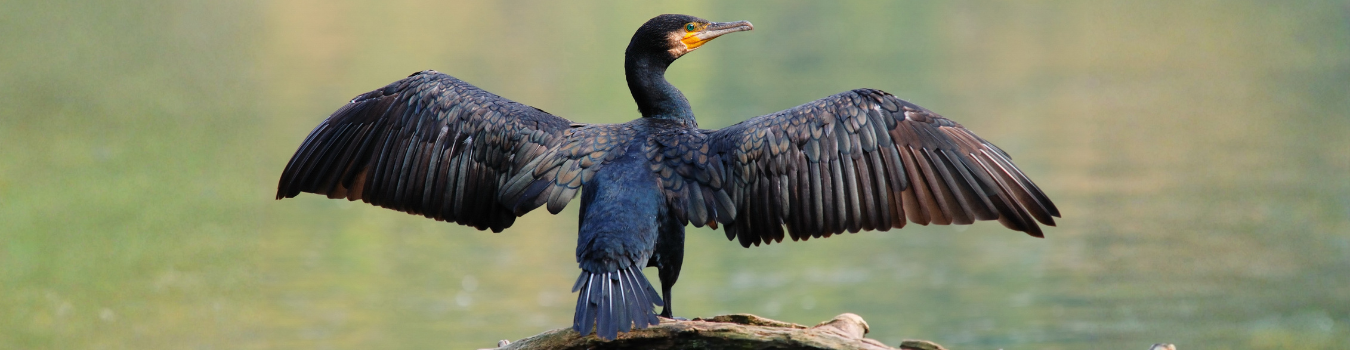
The high numbers of cormorants and goosanders in evidence this season have generated understandable concern from anglers, angling clubs and fisheries, so we thought it would be helpful to provide an update on what the Angling Trust has been doing to try to secure better protection for our fisheries from these birds.
Background
The huge increase in cormorant numbers is unquestionably one of the biggest threats to the health of our inland fish populations. Cormorant numbers in the UK have increased from 2,000 in the 1980s to a current over-wintering population of more than 65,000. With each bird requiring at least one pound of fish every day, the level of conflict is immense. Cormorants have almost no natural predators in the UK and their removal from the general shooting licence in 1981 triggered substantial growth in numbers, to the obvious detriment of fish populations.
Since its formation in 2009, the Angling Trust has been campaigning to make it easier for fishery managers to protect fish from cormorant and goosander predation and for greater control of these extremely damaging fish-eating predators. We continue to believe that the best outcome would be for cormorants to be included on the General Licence, provided that the conservation status of the birds is not threatened.
In 2019, alongside the Avon Roach Project, we published a comprehensive case – The Impact of Cormorants on Fish Populations of Economic Importance and Conservation Significance. This made a powerful argument for cormorants to be included on the revised General Licences.
Anglers were encouraged to get behind the call for the birds to be added to the General Licence and to lobby their MPs. Our campaign was run in partnership with the Avon Roach Project and garnered considerable attention, but the call was eventually rejected by ministers the following year. In March 2024, we did receive ministerial consent to revive our plans, but unfortunately everything was stalled by the General Election a few months later. It is certainly not correct, as some have claimed, that getting these birds on the General Licence is a lost cause, and we will keep battling.

The Angling Trust and the Avon Roach Project, supported by wildlife film maker Hugh Miles, Chris Tarrant and Feargal Sharkey, present a petition to Fisheries Minister Richard Benyon calling for controls on cormorant numbers.
Action across Europe
We have also been working with angling organisations in the European Anglers Alliance on a full European Cormorant Management Plan, which would see numbers reduced from Turkey to Norway and which will be voted on in the autumn.
The draft plan was facilitated by the Angling Trust and the European Anglers Alliance (EAA), and co-authored by Professor Ian Cowx from the University of Hull. The plan recommends control measures to reduce cormorant numbers to sustainable levels in order to protect fish and biodiversity. The key recommendations include:
- The objective is to see a significant decrease in cormorant-related conflicts.
- Acceptance that many local plans to control cormorants have not worked due to the pan-European spread and high mobility of the species.
- Addressing the significant biodiversity loss in forests where cormorants roost.
- Having an adaptive management plan informed by a rigorous evaluate–adjust–adapt process.
- A framework to facilitate the use of derogations to authorise the controlled culling of cormorants whilst maintaining their favourable conservation status.
- Assigning no-cormorant zones for fish in high-conflict areas.
The draft plan was endorsed at a special conference in Brussels attended by over 230 delegates from 35 countries, including the Angling Trust, and organised by the Polish Government, who currently hold the presidency of the European Commission. We are hopeful that it might be easier to persuade the UK government to sign up to a European initiative, particularly as the majority of cormorants are from Northern Europe and it makes sense to deal with them on a cross-border basis.
Free Advice and Help
In our submissions, we make the conservation case for cormorant controls in the interests of threatened fish species such as salmon, sea trout and eels, as well as general fish populations. At no point have we put forward proposals that would endanger the conservation status of the birds themselves.
There is no doubt progress has been slow. Despite the obstacles, we have made some limited progress and the previous government introduced an increase in the number of cormorants licensed to be shot, from 2,000 to 3,000. This is a marked improvement on the previous decade, when shooting was only allowed as scaring in most cases.
We have also secured EA rod licence funding for two Fisheries Management Advisers (FMAs) and the introduction of area-based licences to deal with predation across whole catchments. Clubs and fisheries can contact the Angling Trust directly for support with funding applications, advice on measures to protect individual fisheries, and assistance in completing licence applications for the control of cormorants.
The Angling Trust’s two Fishery Management Advisers, Jake Davoile and Richard Bamforth, provide free advice and help on all predation matters. Last year they dealt with over 1,000 enquiries on cormorants, goosanders, otters, seals and even beavers. The majority concerned predation by cormorants and goosanders. Jake and Richard continue to help hundreds of clubs and fisheries apply for licences to control cormorants, and the process itself forms part of the overall assessment of cormorant numbers. The government’s licence application includes a section directing applicants to seek advice from the FMAs before submitting.
Could Crowdsourced Data Apps Help?
There has been some recent interest in a newly launched project which includes an app to report bird sightings and proposes to charge clubs and fisheries for help with submitting licence applications. The Angling Trust welcomes any serious initiative that engages the angling community in highlighting the threat posed to fisheries by unsustainable levels of predation by cormorants and goosanders, but there are some points that need to be made.
As our colleague Trevor Harrop (Avon Roach Project) has made clear, the annual bird count by the British Trust for Ornithology (BTO) is the only scientifically accepted dataset upon which UK Cormorant Licence Policy and the Baseline Conservation Threshold are determined. That said, a free app service could be useful in engaging anglers and counting roost numbers to enable us to provide further evidence as part of the pan-European initiative. The Trust is committed to partnership working on the issue of cormorant predation and looks forward to seeing how this data can best be deployed for the benefit of the angling community.
Contact
Given the free professional support that is readily available to all clubs and fisheries, it is difficult to see why rod licence payers would want to pay twice for control advice. Our strong advice to all fisheries and clubs with a predation problem is to get in touch with the Angling Trust’s experienced Fishery Management Advisers and take advantage of a free service that will guide them through the application process, record cormorant numbers and give them the best possible chance of securing a local or area licence.
The Angling Trust will continue fighting to get the law changed in both the UK and Europe to give us the ability to protect fish stocks from predation by cormorants. The Trust, our predecessor organisations and partners such as the award-winning Avon Roach Project have been fighting this battle on behalf of fish and fishing for over 25 years, and we all intend to keep going for as long as it takes to secure a successful outcome for anglers.
You might also like

Marine heatwave: what it means for sea anglers
Bluefin Tuna Catch-and-Release Recreational Fishery 2026
Rays of Tope: New project to unlock the secrets…
New ICES advice highlights mixed picture for key recreational…

Angling Trust welcomes UK ratification of landmark High Seas…
UK Government Pours Cold Water on Urgent Reforms to…
Anglers’ Data Stands Up to Scientific Scrutiny
Team England Fly Fishing on the Hunt for Medals…

Benjamin’s Comber confirmed as new British record

New British Carp Record
IFFA Spring Loch Style Fly Fishing International at Llyn…