





Lines On The Water
Our rivers are being damaged by leaking tap water – a Water Quality Monitoring Network Special Report
The Angling Trust’s Water Quality Monitoring Network takes regular samples from rivers all over the UK, revealing the pollution crisis they face. Approximately 25% of all tap water in England and Wales leaks from pipes into the environment. So, we turned our trusty phosphate testing devices to tap water instead, with alarming results.
Whilst not harmful to human health, phosphate wreaks havoc on freshwater ecosystems as it can lead to eutrophication – where excessive nutrients cause algal blooms, dissolved oxygen depletion, and harm to fish and other aquatic life. In this blog, we explore why phosphate is added to tap water, how it ends up in the environment, and what can be done to fix the problem.
Sampling results
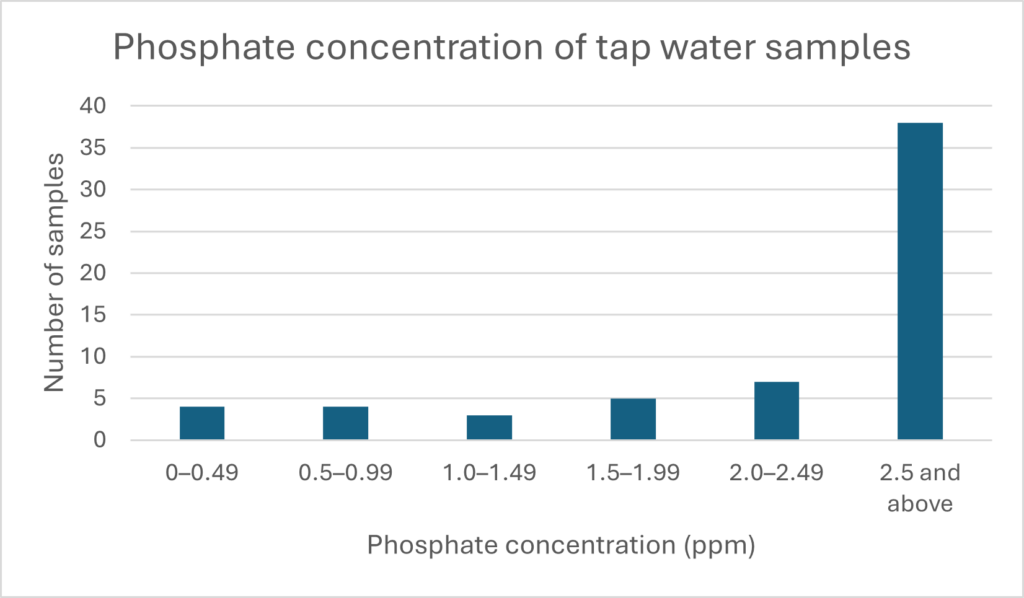
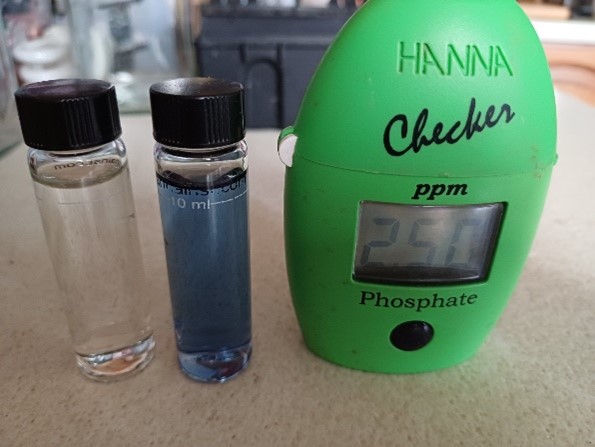
In the WQMN annual report, we found that 34% of samples taken from rivers across the country failed to meet ‘good ecological status’ due to breaching the upper limit of 0.31ppm phosphate concentration. Out of 60 tap water samples taken, more than half (62%) maxed out the phosphate devices at 2.5ppm – meaning that the concentration was at least 2.5ppm.
Many volunteers reported their samples turning bright blue – something only seen in the natural environment during the most extreme pollution events.
Why phosphate is added to tap water
Lead piping stretches back millennia. It’s been used since Roman times across Europe, remaining the predominant choice for water supplies well into the 20th century at which point the detrimental effects of lead poisoning on human health became clear. Responding to the science, the use of lead in new pipes in plumbing was banned in 1970 in the UK.
Of course, that left centuries of lead piping in place, which cannot be replaced overnight. Luckily, treating tap water with phosphates is highly effective at preventing lead poisoning from water pipes. Once in the water, phosphorous acts chemically to form a protective layer inside lead pipes, reducing the likelihood that lead will leach into drinking water.
As a result, public tap water in the UK meets high safety standards, with 99.98% of samples passing health and safety standards. The addition of phosphates to tap water in the concentrations typically seen in the UK to prevent lead poisoning doesn’t raise any human health concerns. As a result, neither the Drinking Water Inspectorate or the World Health Organization specifies health-based guidance for phosphate in drinking water.
Environmental impact of phosphates in tap water
Phosphate loading of our drinking water supply matters for the environment, because tap water doesn’t just come out of taps – the biggest UK water utilities lose around 25% of drinking water to leakage, equating to 40 litres per customer per day. This means that the sky-high phosphate readings found in WQMN’s tap water ends up in the natural environment.
Volunteers are equipped with phosphate readers because it is a nutrient which contributes to eutrophication, starving fish and other wildlife of oxygen. We revealed in our latest annual report that 34% of all samples tested between July 2023 – July 2024 breached ‘good ecological status’ for phosphate concentration. The two primary drivers of this failure are the discharge of raw sewage and agricultural runoff. However, leakage from pipes enters groundwater systems and can infiltrate lakes and rivers. This pollution source has gone under the radar for decades, despite making significant contributions to nutrient loads in the environment.
It is estimated that around 1,200 tonnes of phosphorous enters the environment from tap water every year in England and Wales. That’s the same weight as 100 double-decker buses of harmful nutrients leaking into the environment annually! This huge phosphate infiltrates groundwater systems, some of which feeds lakes and rivers.
Replacing lead pipes
Phosphate dosing has been effective for making our water safe to drink, but has come at a huge environmental cost. It’s important to recognise that it provides a temporary fix, not a long-term solution. Ultimately, lead pipes must be entirely replaced.
The solution is complicated due to the mixed ownership of lead piping in the UK. Some lead piping is owned by water companies and some is owned privately (largely by households). The water industry made the ‘commitment’ to lead-free supply by 2050. But this is not a legally binding requirement. Public trust in the water industry to meet even their basic legal obligations are at an all time low, and their progress towards essentially optional improvements has been extremely limited.
An immediate issue arises from the fact that the water industry doesn’t know how much lead piping they own. Thames Water, the UK’s largest water company which supplies 19 million people, has spent £82.7m to replace 89,465 pipes. But, they couldn’t provide a figure for how many pipes there are still to go.
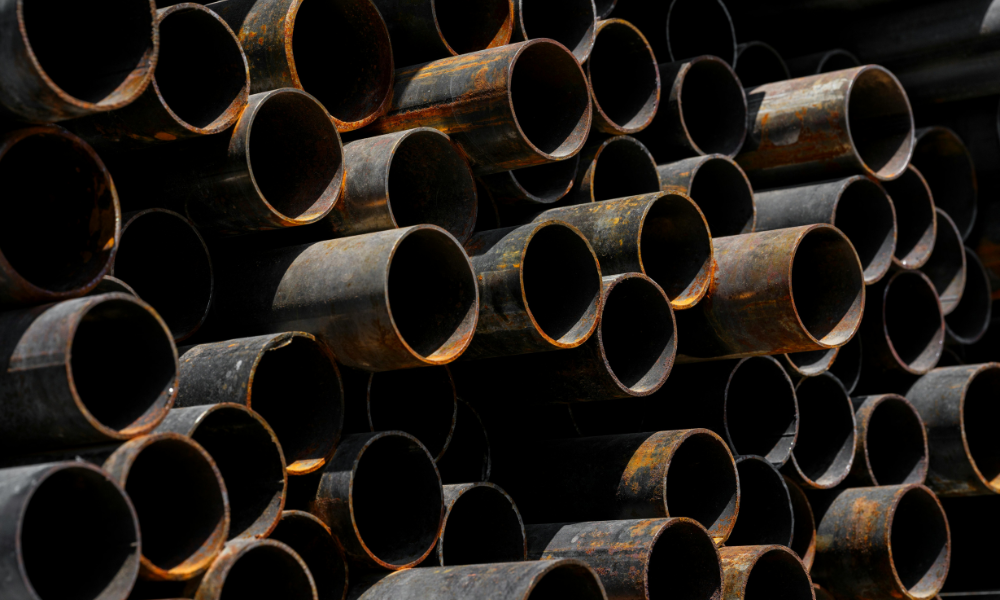
The recent Cunliffe Review into the water sector recommended a comprehensive mapping of water company assets must take place in order to understand the scale of investment needed to fix our crumbling infrastructure. This must take place swiftly, independently, and comprehensively to grasp, amongst other things, the scale of the challenge in replacing our lead pipes which the water industry claims to be committed to.
Clear mapping of lead piping and ramped up investment is urgently needed, and must tackle both water company and privately owned assets. Policies have emerged to this end, but the investment has been pitiful. If homes notify their water company of their intention to replace private lead pipes, then the company is legally required to replace its section of pipe from the property’s perimeter to the mains. Several water companies also offer financial assistance to encourage homeowners to replace lead pipes from their properties. A few WQMN volunteers have even had their water company pay entirely for the replacement of lead pipes on their property.
Are these policies making progress towards the ‘no lead piping by 2050’ commitment? No – The Telegraph reported last year that water companies are only on track to replace all lead pipes by 3273. Rather than meeting their ‘commitment’ by 2050, at the current rate, we’ll have to wait another 1,248 years!
Following the ‘once in a generation’ review of the water sector released in July, the government will produce a white paper setting out its ambitions in the autumn, before tabling legislation within the first half of this parliament (by July 2026). The Angling Trust and other organisations have repeatedly campaigned for greater investment in the water sector in order to prevent the rampant pollution seen in recent years. Replacing lead piping must form a key part of these reforms if we are to move on from using phosphate dosing as a stop-gap solution to lead poisoning in the drinking supply.
Stop the leaks
Even with a radical shift in ambition and investment for infrastructure improvements, lead piping will remain in place for years to come. During this time, significant investment is required to reduce leakage from water pipes. We are writing at a time where there are hosepipe bans in several regions and our rivers are over-abstracted to keep the taps flowing.
Fixing our leaking pipes would go a long way to meet water shortages and prevent excess phosphates entering our waterways. We are at a crossroads in the world of water governance. The Cunliffe Review highlighted the water industry’s chronic underinvestment which has led to crumbling infrastructure, and a quarter of tap water leaking from pipes. Ofwat will be scrapped and a new ‘super regulator’ will take responsibilities from Ofwat, the Environment Agency and Natural England.
Companies need clear, enforceable targets for replacing and upgrading old mains. The replacement of leaking pipes and old lead piping must be scheduled in a way that prioritises high-leakage areas, pipes nearing the end of their design life, and regions facing water scarcity. Regulatory changes should shift incentives so that leakage reduction is no longer an optional public-relations exercise, but a requirement backed by penalties and rewards.
Conclusion
Phosphates will continue to be loaded into our drinking water to the alarming levels highlighted by the WQMN’s samples as long as lead piping remains in place. The environment cannot wait the 1,248 years it will take at the current rate of replacement. Stronger regulatory oversight, targeted leaking and lead pipe replacement and a drastic increase in investment would significantly reduce the 25% leakage rate, lowering environmental pressures on rivers, lakes and seas whilst lead replacement takes place.
Find out how YOU can support the Angling Trust’s Anglers Against Pollution campaign
You might also like

New British Carp Record

IFFA Spring Loch Style Fly Fishing International at Llyn…
Angling Trust Calls for Recreational Sea Fishing to Be…
Learn, Coach, Support, Welfare: Explore Opportunities with the Angling…
Sea angling greats Sam Collier and Saul Page named…

New British Barbel record ratified

Mersey Basin Species Hunt Returns for 2026

Angling Trust sets out vision for coastal growth in…

Angling Trust and Environment Agency evolve volunteer support for…

Tench Masterclass 2026: scenes from a stunning 48 hours…

Tackling mink on club waters: a real-life success story…