



Marine
Why Lifting the Bass Drift Net Ban Would Be a Disaster
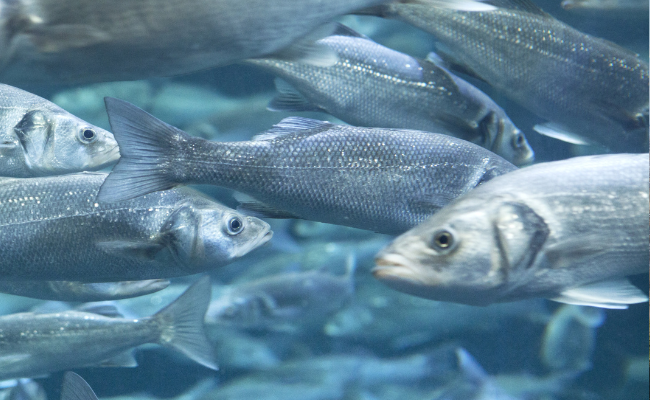
A recent article by the Renaissance of East Anglian Fisheries (REAF) in Fishing News claims it’s “time for a rethink” on rules banning bass drift netting. We couldn’t disagree more. Allowing bass drift nets back into our waters would be a giant leap backwards for bass conservation and marine wildlife. The current ban exists for good reason, and it must remain in place to safeguard both the bass stock and countless other marine species, including migratory fish, seabirds and cetaceans.
REAF portrays small-scale drift-netting as “selective” and “low-bycatch.” In truth, drift nets are notoriously indiscriminate. They don’t just ensnare bass; salmonids, dolphins, porpoises, sharks, seabirds, other protected marine species, and non-target fish are all at risk from drift nets. Many of these species are already vulnerable. For example, 62% of seabird species in the UK are declining, and bycatch is one of the top three threats to seabirds globally. Every year, an estimated 95,000+ seabirds, including vulnerable species, drown after becoming tangled in gillnets in the Northeast Atlantic and Baltic Sea. Drift nets, especially those fished higher in the water column for bass, pose an even greater risk than static nets, so reopening the door to drift-net fishing for bass would inevitably add to this bycatch death toll.
The UK Government acknowledged these dangers back in 2015, when it banned drift nets in the bass fishery specifically “to minimise the bycatch of sensitive and migratory species”. Those “sensitive” species include seabirds, as well as marine mammals and other fish, such as salmonids. Nothing has since changed to make drift nets any less destructive today.
Despite REAF’s assertions, method does matter. A catch limit alone isn’t a magic shield against ecological harm if the method of capture is unselective. We can’t ignore bycatch as collateral damage, UK law now enshrines a duty to avoid and reduce bycatch wherever possible and to minimise and, where possible, eliminate bycatch of sensitive species specifically. Reintroducing a gear that kills non-target marine life flies in the face of that legal duty, and of the UK Fisheries Act (2020) objectives for sustainable, ecosystem-based fishing.
It’s true that bass stocks are in better shape now than a decade ago, because tough measures like the drift net ban were put in place. In the mid-2010s, bass were severely overfished, and the stock crashed. Emergency restrictions (including banning drift-net bass fishing) were implemented to save the stock. Thanks to these protections, bass are slowly rebounding. But make no mistake: this is a fragile recovery. Bass are a slow-growing, late-maturing species that are highly vulnerable when targeted during their spawning aggregations. Allowing drift nets would mean targeting bass en masse at the very moment when they need protection, as they shoal up to migrate or spawn. That’s precisely what led to past crashes. The UK’s Joint Fisheries Statement emphasises avoiding unsustainable exploitation of such aggregations, and we must respect that policy. Recruitment of young bass remains poor, and so we should be looking to build on the fragile recovery of bass, not seize on it as an excuse to roll back conservation rules.
REAF argues the ban is no longer “proportionate or justified.” We ask: What could be more justified than preventing the unsustainable targeting of bass shoaling to spawn and protecting our marine ecosystem? It is far cheaper and wiser to keep conservation measures in place than to risk another collapse and then have to restore it slowly and painfully all over again. History has taught us this hard-won lesson with bass and other species: we cannot afford to forget it and return to boom-and-bust fisheries.
The REAF article spends considerable time pointing a finger at seals for eating bass caught in fixed nets. We empathise with any fisher frustrated by seal depredation. Grey seal numbers have indeed increased on the East Coast. But scapegoating natural predators is a dangerous distraction from the real issue. Seals are a sign of a healthy coastal ecosystem, not the cause of fisheries collapse.
Allowing drift nets again in response to seals eating fish from nets is a cure worse than the disease. A drifting net may spend less time in the water than a fixed gillnet, giving seals less opportunity to snatch fish – but in exchange, it would exact a higher price on other wildlife through indiscriminate catches. We will not solve the seal vs. fisher conflict by introducing another, even greater conflict with nature. Non-lethal seal deterrents and smarter fishing practices are the way to address seal interactions, not turning back to an ecologically harmful gear. The public cherishes seals and seabirds alike; pitting commercial fishing against conservation concerns is a losing game. Our coastal communities deserve sustainable solutions, not false choices.
We’d like to see what data the MMO holds on seal predation of bass discards, alongside general bass discard data from the area, all of which is compulsory to log in the MMO Catch App. We are being told that discards are an issue, but we would like to see how the data supports this claim.
Critically, maintaining the drift net ban isn’t just about conservation; it’s also about economics and community well-being. REAF highlights the short-term income loss some East Anglian fishers suffered when drift-netting for bass was halted. We don’t dismiss those impacts; indeed, more support should be directed to help small-scale fishers adapt to changes in fisheries management. However, let’s not forget that the recovery in the bass stock and the higher profits it is now generating for fishers are a direct result of the restrictions. Lifting the restriction for fishers in East Anglia puts those profits at risk for other fishers – economic madness.
The answer isn’t to revert to old, unsustainable ways. The answer lies in promoting truly low-impact fishing methods and diversifying opportunities, so that coastal fisheries can thrive without ravaging the very ecosystem they depend on.
Let’s remember that bass are worth far more than just their market price per kilo. A single bass can be caught recreationally by dozens of anglers over its lifetime, generating significant economic activity in the angling and tourism sector. Sea angling supports 15,000+ jobs in the UK and is worth over £1.5 billion annually, with bass being one the most popular targets. Healthy bass populations fuel a thriving recreational fishery that benefits charter boat operators, tackle shops, hotels, cafes, and other coastal businesses – a sustainable, renewable revenue stream year after year. By contrast, a bass caught in a drift net yields a one-time profit for one boat. If that drift net also kills a dolphin or a rare seabird in the process, it has destroyed value.
The claim that drift nets have “no adverse impact” when well-managed is wishful thinking. Even a limited trial, as REAF proposes (interestingly, proposing the same catch limit available to the only legal targetable bass fishery (hook and line) rather than the bycatch quota for fixed gill nets), poses unnecessary risk. It would be incredibly difficult to monitor numerous small drift nets for compliance. And once the ban is lifted for a trial, pressure will mount to expand it. The “slippery slope” here isn’t hypothetical; it’s a well-trodden path in fisheries management. We’d be gambling with our bass stock and marine wildlife.
The UK Fisheries Act (2020), and the emanating Joint Fisheries Statement and Fisheries Management Plans, were designed to steer us into a future of smarter, greener, ecosystem-based fishing, not back toward practices widely condemned around the world. The United Nations and the European Union, and many countries have banned drift nets outright for their devastating impacts. The bass drift-net ban is a shining example of the UK’s commitment to that ethos. It has already spared untold numbers of non-target species and helped bass begin to bounce back.
Now is not the time to undo this progress. Now is the time to stand firm. We call on Defra and MPs to reject calls for ending the bass drift-net ban and instead focus on supporting small-scale fishers through sustainable alternatives. By investing in selective gear, robust monitoring, and inclusive management (with all stakeholders at the table, REAF included), we can find solutions that deliver both healthy fisheries and thriving coastal communities.
Bass are a shared public resource and a key predator in marine ecosystems; they are too important to sacrifice for the sake of a few nets. Let’s keep bass fishing fair, sustainable, and responsible. That means hook and line must remain the only permitted targetable bass fishery.
In summary, we urge policymakers to hold the line and keep the bass drift net ban in place. Our bass, our seabirds, our marine mammals, and the future livelihoods of our coastal communities and everyone who has a stake in healthy, sustainable seas depend on fisheries management measures that consider wider ecosystem impacts. Lifting the bass drift net ban would not align with this approach. We will also be writing to Defra to highlight the manifold risks presented by lifting the ban.
This statement is support by the Angling Trust (AT), Bass Anglers Sportfishing Society (BASS), the Royal Society for the Protection of Birds (RSPB) and Bass Anglers Conservation (BAC).
You might also like

New British Carp Record

IFFA Spring Loch Style Fly Fishing International at Llyn…
Angling Trust Calls for Recreational Sea Fishing to Be…
Learn, Coach, Support, Welfare: Explore Opportunities with the Angling…
Sea angling greats Sam Collier and Saul Page named…

New British Barbel record ratified

Mersey Basin Species Hunt Returns for 2026

Angling Trust sets out vision for coastal growth in…

Angling Trust and Environment Agency evolve volunteer support for…

Tench Masterclass 2026: scenes from a stunning 48 hours…

Tackling mink on club waters: a real-life success story…