



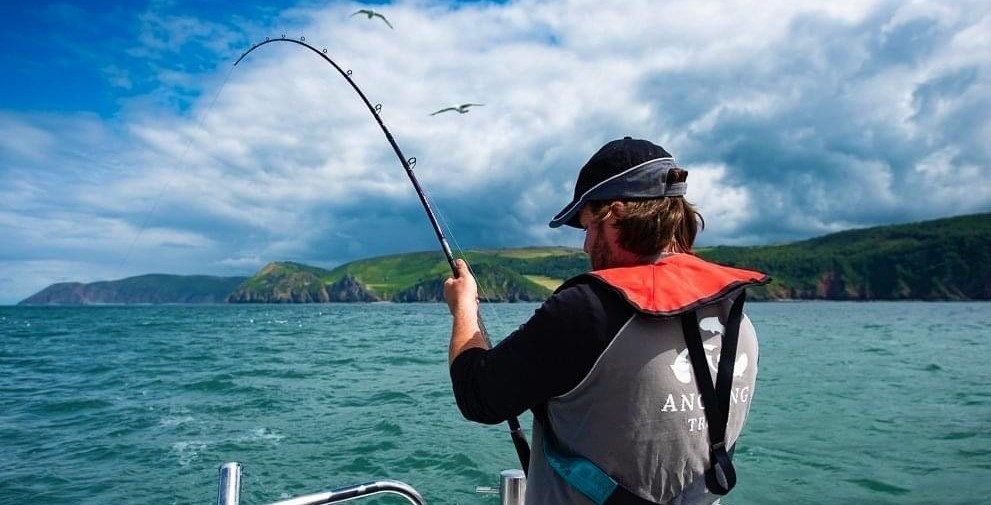
Beyond the Breakers
Not Perfect, Not the Worst: CEO Reflections on the Bass and Pollack Deal
Over the past week, there has been a fair bit of noise online about the recent bass and pollack outcome, which saw an agreement between the UK and EU to implement an uplift in the recreational bass bag limit from 2 to 3 fish, and introduce a new recreational pollack bag limit of 3 fish in 2026.
Whilst these measures have been acknowledged as probably the best our community could hope for from a recreational management perspective, I get why some sea anglers are feeling angry, frustrated, and powerless. But let’s take a step back to better understand the bigger picture.
For the last few years, these fisheries have been under intense scrutiny. Pollack stocks were showing worrying signs of collapse with the targeted commercial fishery closed in 2023; bass remains a vulnerable species despite showing glimmers of recovery, and management decisions had to be made against a backdrop of shared stocks, complex science, and competing sector interests.
Five years ago, recreational anglers would not have had a seat at the table in these discussions. Decisions would have been made over our heads, with bans slapped on our sector without discussion – just as happened with bass in the past. Today, that has changed. Recreational sea angling is a recognised stakeholder in UK fisheries management, and that is no accident. That status is the result of relentless behind-the-scenes work by the Angling Trust and partners on behalf of the community.
We have been pushing for fair allocation of shared stocks, better science to underpin decisions, protection of charter boats and recreational fisheries for anglers across the country, and investment in infrastructure so UK recreational fisheries can one day be world-class like Australia, New Zealand, and the United States. We’ve done this even when our community hasn’t always been behind us, even when the work goes unseen, and even when the choices were tough.
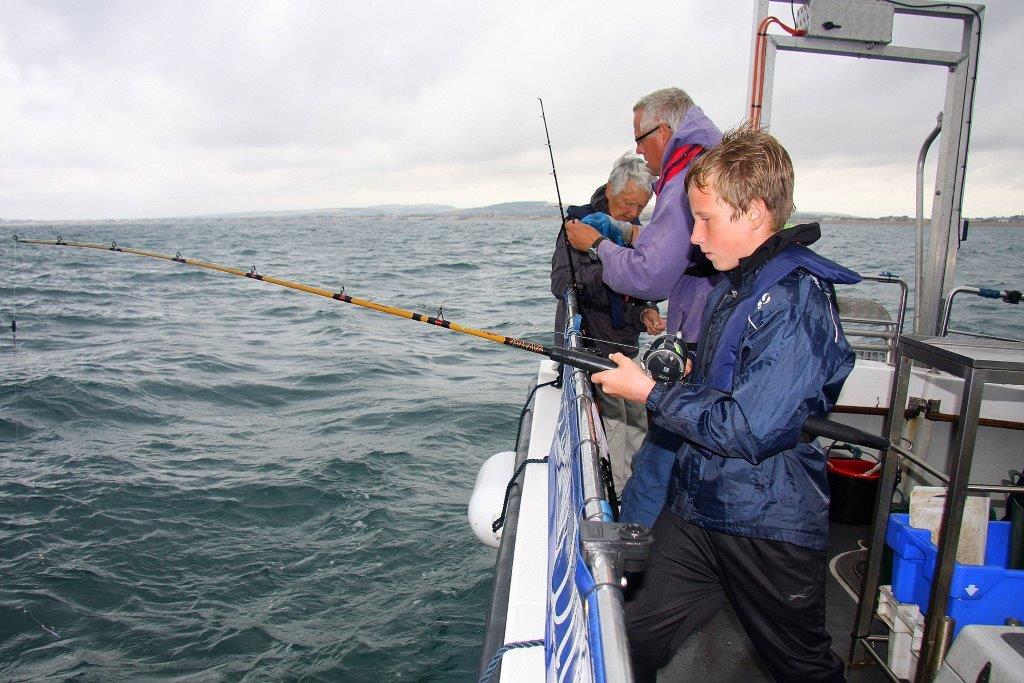
These are shared stocks. Fish move. They go places. They don’t belong to ‘us’ or ‘them’; they swim in the sea and need to be managed internationally, with domestic adaptations for local and regional differences. Every fish allocated to one sector is a fish not available to another. If recreational anglers don’t secure their fair share, it will go to the commercial sector. No one is forcing anyone to take three bass a day. But the option now exists, which matters for East Coast charter skippers who have less diversity to target than their Southwest counterparts.
Bass itself is a conservation success story, and the Angling Trust and our colleagues in the Bass Anglers Sportfishing Society (B.A.S.S.) have been involved throughout. Tough decisions 10 years ago have resulted in a species that was once on the brink of extinction experiencing a welcome resurgence, where anglers can now reliably catch bass in seas once devoid of the species. Stocks bounced back when science-led management was applied. That’s how recovery works.
And yes, we are absolutely appalled by the new increases in commercial bass bycatch allowances. But the UK successfully blocked proposals by the EU to remove the bass closed season and to reintroduce pair trawling this year too. That is a real win – and it shows what persistence, evidence, and clear advocacy can achieve. Others rightfully highlight the need to implement a bass slot size, increase the MCRS for pollack, and consider a pollack closed season too – and those debates continue through the Fisheries Management Plan framework. We support all of them and are banging the drum for them too, but the fact that we didn’t get everything we asked for, in the face of other stakeholders demanding more, is not a failure or a sign that we lack influence – quite the opposite. Like it or not, the Angling Trust is the best opportunity for effective, professional representation that sea anglers have desperately lacked.
For the last three years, the Angling Trust has been going into bat relentlessly on behalf of the sea angling community on pollack. Since serious concerns were first raised about pollack, we’ve pushed back against proposals that could have devastated recreational angling – including an outright ban. We’ve challenged poor evidence, called for better data, and fought for fisheries to be managed with anglers and charter skippers in mind, not just commercial quotas. The EU initially proposed a two-fish bag limit and a recreational-only closed season in 2026, as they already have in France. While not everyone is happy with the outcome, we are all in agreement that this would have been even worse for our sector and avoiding it is a small victory.
We have not hidden any of this. Earlier this year, over 400 anglers responded to our pollack survey, sharing their views on stock status, bag limits, and what recreational anglers should be allowed to do. Those responses informed our position. If you didn’t respond when you had the chance to have your say, then perhaps next time the opportunity comes around, you should make time.
These discussions will take place annually, and every single year we will face different challenges – not engaging and then complaining that you didn’t get what you wanted or were ignored is no longer a credible option. Be part of the solution. We are open to comments and feedback, because the more we understand your perspective, the stronger our advocacy becomes, however as any of you who have read social media over the past week will appreciate sea anglers do not have one, single, unified opinion – we all see it differently and frankly our job at the Angling Trust is to secure the best outcome for fish, fishing and the environment.
So if you want to take no bass at all, or one bass but only of a certain size, be that personally or as a charter skipper, please be our guests – how fantastic that recreational fishers are leading sustainable fishing by acting responsibly based on what their local ecosystem dictates. Anglers and skippers are the eyes and ears of our local waters – we understand them intimately, and therefore, having national and international representation when our seas face so many other pressures has never been more critical.
Fisheries management decisions are based on data from data collection programmes like the Sea Angling Diary. This data feeds into assessments of bass and pollack, modelling the recreational take. We took anglers’ concerns about the Sea Angling Diary and ground-truthed it with a nationwide survey called Catchwise, which provided more scientific confidence in its outputs. Looking into 2026, we’re seeking to set up an advisory panel on the Sea Angling Diary with our partners to ensure anglers have a voice in the process. Pollack FISP was another significant multi-partner project, with a consortium of charter skippers from the Professional Boatman’s Association, that produced data central to policy decision-making; without that data, our advocacy would have been severely limited. Science has to be the foundation of how we make fisheries management decisions in the UK, so if you want to improve it, get involved.
This week, we wrote to the Minister responsible for Fisheries, Angela Eagle, calling for charter skippers to be fairly compensated, just like their commercial counterparts. In our letter, we highlight how we co-developed voluntary measures with the sector and secured UK Government funding to distribute descending devices free of charge to our community. This has been our message for the last three years, and we will continue to bang that drum, and you can too. We would encourage you to write to your MP with your own note explaining why their support is critical and we have prepared a template to guide anglers and skippers who wish to do so here.
Recreational angling supports jobs, businesses, and coastal communities – and that contribution deserves recognition. If the government accepts that commercial fishing can receive compensation in light of management restrictions, it must also recognise that charter fishing businesses are part of the fishing industry. Our eyes are wide open to the industrial lobbyists and the industrial-fishing operations that wish to scoop up all the fish in the sea. We’re actively pushing back against them, but we need to do so in unison with others who share our vision, like inshore small-scale commercial fishers, to fight back with clout. Those who are exploiting our oceans at an industrial rate want to see us scrambling, disorganised and in-fighting. We are more powerful together than apart – and they know that.
So, we are not stopping there. We know the importance of giving charter businesses a voice, managing fisheries sustainably, investing in infrastructure to make UK recreational fisheries world-class, and fighting access proposals on behalf of member clubs. Our work isn’t just on pollack, bass, and tuna – we’re advocating on mackerel, cod, ling, wrasse, haddock, mullet, black bream…you might not see it – but you name it, and we are on the frontline. The creation of sustainable fisheries for recreationally important species across the board is our bread and butter. Our seas are changing at an unprecedented rate, and we must remain nimble in our advocacy to get a fair deal for sea anglers and the fish that we love.
Make no mistake: we have a small but effective team, led by our Head of Marine, Hannah Rudd, working day in, day out on behalf of the angling community. We are in the rooms where the decisions are made, fighting for anglers even when that work is unseen or unappreciated. And we do it relentlessly, because someone has to. Where necessary, we have taken legal action, in partnership with our sister organisation Fish Legal, and we will continue to lead those fights at the highest possible level.
Even with precious little practical support from the anglers and skippers who apparently feel so strongly about these policy decisions and whose communities and livelihoods could be damaged without us fighting on your behalf, we are there. We will continue to be there, but we would be so much stronger and so much better resourced to fight these battles with just a little of your support.
You don’t have to like this outcome. I understand why many anglers don’t. But pretending there was a simple alternative does not reflect the reality of what was on the table and certainly doesn’t acknowledge what the alternative would have looked like had we not worked as hard as we have. These outcomes are not perfect. They are not the worst. But they are far better than what could have been, and this will not be the last conversation about recreational sea angling and fisheries management.
We will be here in another year, having similar discussions with the UK Government as they prepare to negotiate with the EU, and we will be here throughout the year working domestically and locally with Defra, MMO, IFCAs and others on fisheries management discussions that will have an impact on your angling or your business, so I suggest if you have felt strongly enough to comment this week, in future you get involved.
The Angling Trust is your voice in the corridors of power. Engage with us. Share your views. Become a member. Challenge us, use us, work with us. Whether it’s annual UK-EU negotiations, Fisheries Management Plan discussions, or local fisheries management, we have access, influence, and a track record of delivery. If you want your voice heard, the most effective thing you can do is join and engage with the National Governing Body for angling. There is only one organisation able to fight for you where it matters, and frankly, now is the time to decide whether you want a voice or not.
There is a long way to go before the UK achieves world-class fisheries like our counterparts overseas. But what does “good” look like to you? What is a “win” in your mind, in your community or in your business? Let us know at [email protected]t. Subscribe to our newsletter to stay up to date on the latest developments.
Our vision is clear: world-class recreational fisheries, managed fairly, equitably, and supported by the best possible science, with national investment into sea angling infrastructure and participation as a cornerstone of our coastal communities. We are working damn hard for this community, and we will continue to do so. If you care about the future of your sport, get involved, stay engaged, and make your voice count.
Best Fishes,
Jamie
Jamie Cook
CEO
Angling Trust & Fish Legal
You might also like
Team England Fly Fishing on the Hunt for Medals…

Benjamin’s Comber confirmed as new British record

New British Carp Record
IFFA Spring Loch Style Fly Fishing International at Llyn…
Angling Trust Calls for Recreational Sea Fishing to Be…
Learn, Coach, Support, Welfare: Explore Opportunities with the Angling…
Sea angling greats Sam Collier and Saul Page named…

New British Barbel record ratified

Mersey Basin Species Hunt Returns for 2026

Angling Trust sets out vision for coastal growth in…

Angling Trust and Environment Agency evolve volunteer support for…
