



Invasive Non-Native Species
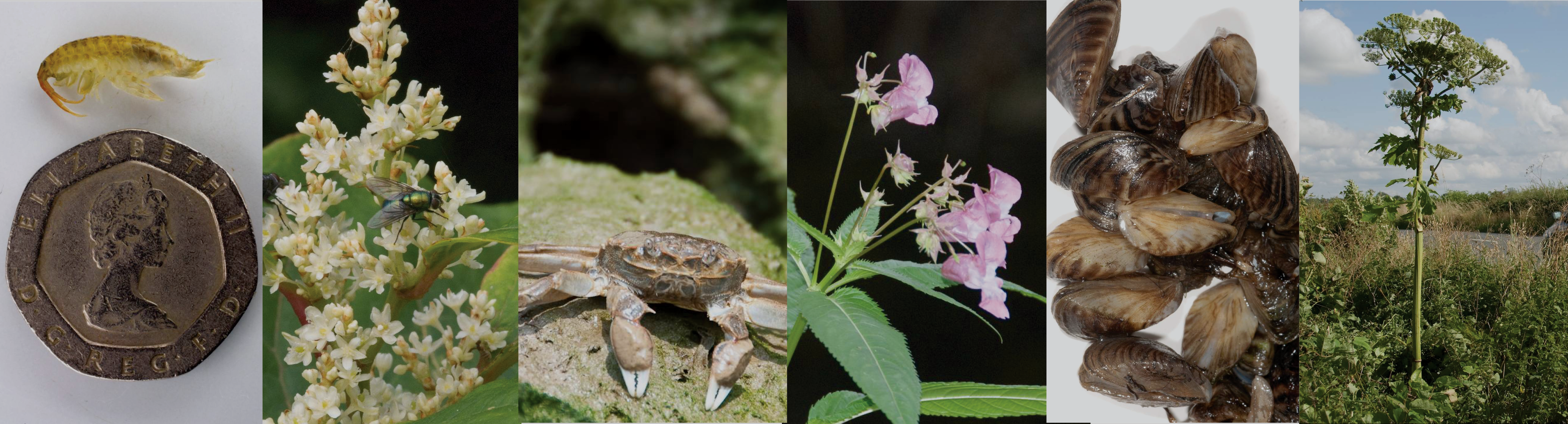
Invasive Non-Native Species (INNS) is the term used to reflect a group of invaders that can do massive damage. Individually and collectively, they can ravage fish stocks, outcompete and dominate native species of plant and animal life and, from an angling perspective, ruin fishing locations served by still or moving water.
Over 2,000 plants and animals have been brought into Britain, but not all are ‘invasive’. In general terms, 10/15% establish themselves in a manner that causes harm to our native wildlife – including the fish present in our rivers, streams and stillwaters.
These can be spread by a number of means from intentional introductions through to accidental spread when a species becomes attached to recreational equipment, tools or clothing. Angling represents a potential route for invasive species to spread between water bodies. It is therefore important we do what we can to stop the spread of species and minimise their impact.
How We Tackle Invasive Non-Native Species
Anglers may not be aware that the simple purchase of an Environment Agency rod licence is one of the best ways to support the removal and general management of Invasive Non-Native Species.
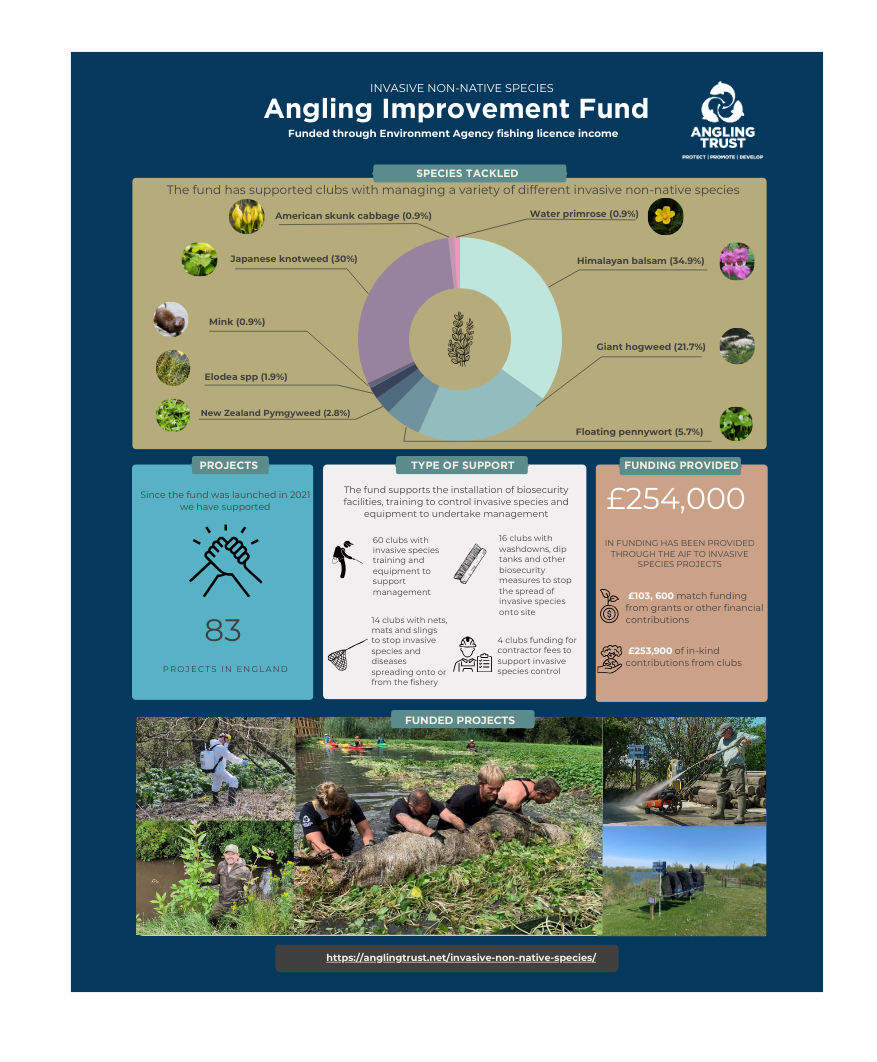
Income from sales is used to support programmes such as bio-security rounds of the Angling Improvement Fund (AIF). This downloadable information sheet, illustrates how more than a quarter-of-a-million pounds worth of rod licence income has been invested to tackle INNS and help protect clubs and fisheries.
A bio-security round of the AIF focusing on nets, mats and slings is now inviting applications from eligible clubs and fisheries. Find out more here.
Prevention
Horizon Scanning – The next ten years
‘Horizon Scanning’ is a process led by by the Centre of Ecology and Hydrology bringing together invasive species experts from different backgrounds to identify new, invasive non-native species. The project focuses on species considered to be a future high-risk threat to biodiversity, ecosystems human health and economies across Britain in the next ten years.
The 2025 report is the third Horizon Scanning exercise to be conducted. The previous two were in 2014 and 2019. The latest, published in May as part of National INNS Week, identifies 145 new threats that are currently either absent or not considered established in Great Britain. The list was then ranked into priority groups and the top 20 alone, features a range of species that could impact on angling, its venues, waterways and surrounding landscape.
The full list and report can be found on the Non-native Species Secretariat website but we’ve highlighted just three species here that may provide a brief indicator of the potential for ongoing and future threats. More detailed information is available on the website reflected above.
Pink salmon (Oncorhynchus gorbuscha)
Pink salmon
A predator native to parts of Asia, Western Canada and Northwestern USA. The risk of entry into Britain is considered ‘Very Likely’ and its presence could affect the spawning of native salmonoids and other native aquatics. Pink salmon in GB have been caught and reported in GB since 2017 but the full extent of their impact and distribution remains unknown. The species have a two-year life cycle so are expected to enter GB waters again this year.
Salmon fluke – Gyrodactylus salaris
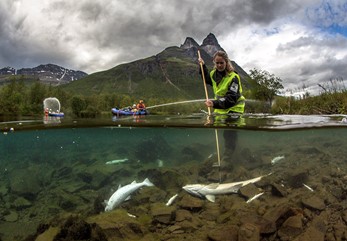
Treating infected fish in Norway
A minute parasite that attaches itself to fish in the salmon family. Highly dangerous to non-Baltic strains of Atlantic salmon and other salmonoids including Rainbow trout, Brown trout and Grayling. This species has not been found in GB waters at present but in some Norwegian rivers it has resulted in catastrophic declines with a 98% decline in salmon populations in 5 years.
Further Reading – www.gov.uk
If you suspect diseased fish: Email – [email protected] Phone – 01305 206700 – Out of Hours – 07833 293506
Marbled crayfish – Procambarus fallax. f virginalis
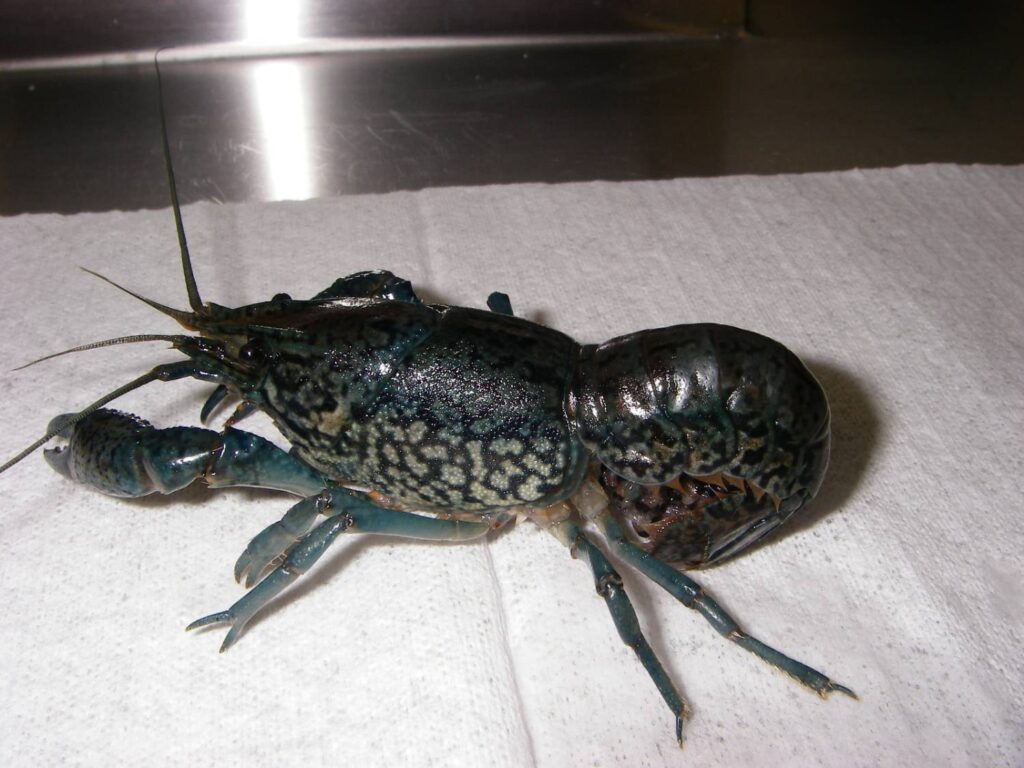
Marbled crayfish
Considered a serious future threat to native ecosystems through its voracious consumption of aquatic plants and invertebrates. While it is currently not recorded as present in Great Britain and is banned from sale in GB, mis-identification can lead to availability through the pet trade and is therefore considered a release threat. As an asexual creature, it does not need a mate to reproduce. A single Marbled crayfish can produce up to 270 eggs every eight to nine weeks.
Check, Clean Dry
Simple measures every angler can undertake to stop the spread of invasive species:
Invasive species can be spread between water bodies in a variety of ways. One of these includes anglers accidentally carrying these species from one site to another on their clothing and fishing gear.
The Check, Clean, Dry campaign provides guidance to anglers and other water users. It reflects an effective approach to the maintenance of equipment to ensure the removal of unwanted organisms and diseases.
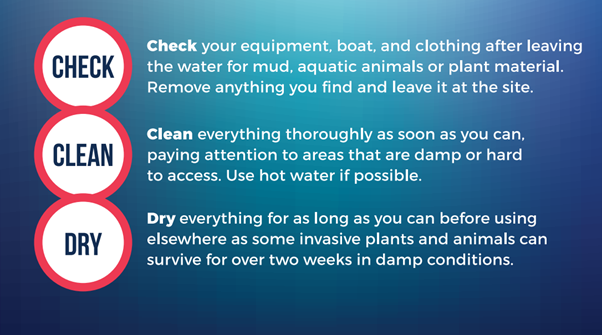
The Angling Trust urges all anglers to adopt measures to reduce the risk of spreading invasive species between waters. After fishing always follow these guidelines.
The Check, Clean, Dry process should be undertaken after every trip; even if kit appears clean. Invasive species can be hard to spot with the naked eye and it’s the same for fish diseases too. Carp anglers know the importance of biosecurity to stop the spread of KHV, salmon anglers will know the importance of avoiding the spread of salmon fluke Gyrodactylus salaris.
If drying out is not a viable option, consider one set of kit for a favourite water and another for travelling to waters fished less often. Disinfecting kit is an option. You should use the solutions recommended by the manufacturer.
Promote Check, Clean Dry to Members, Guests & Visitors
Check, Clean Dry aluminium signs are freely available for coarse, game and marine anglers. Contact [email protected] for more information on how to order.
Check, Clean, Dry posters and other resources are available to download for notice boards for all disciplines. These are available in English and Welsh.
Gardeners Beware!
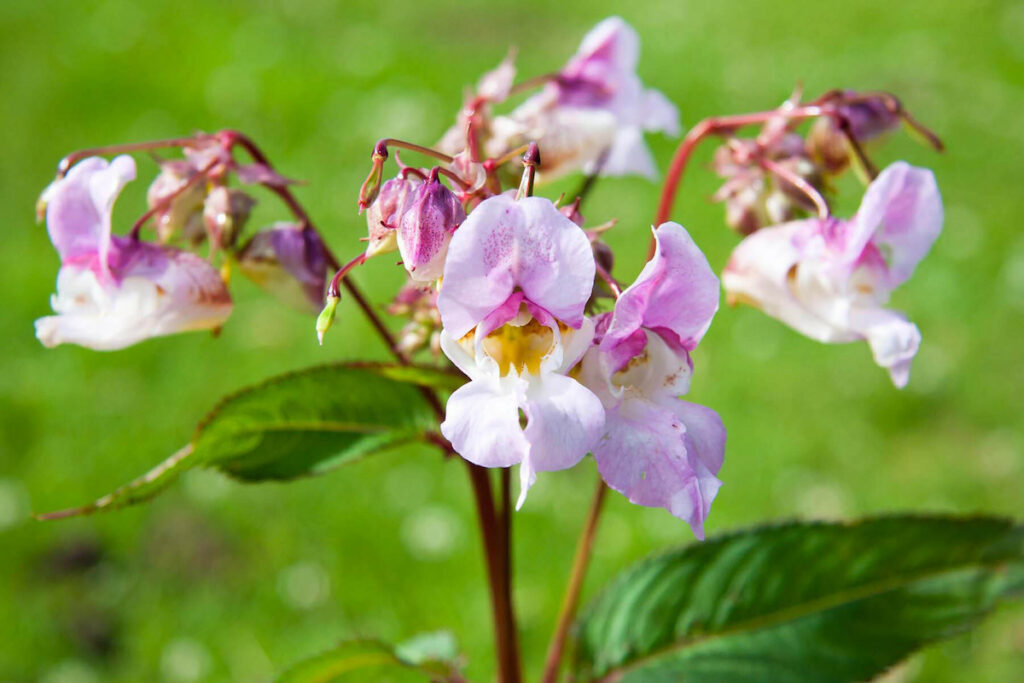
A further major route for invasive species to enter the wild is through species escaping from nearby gardens, or unwanted plant material being dumped into our waterways. The Be Plantwise campaign aims to increase awareness amongst gardeners, pond owners and retailers of the impact of aquatic plants. It also provides information on how to dispose of these plants correctly. The Angling Trust assisted in the design of this scheme and supports the best practice outlined in the campaign. Individuals looking to make plantings are also encouraged to check the names of plant species before introducing any into waters.
Biosecurity Plan
Creating a biosecurity plan for your club or fishery helps to identify the ways an invasive species or disease could arrive onto your site, and what steps could put in place to reduce the chances of it happening. The downloadable templates below reflect guidance for specific waters.



Identification & Reporting
Identification
It is important to be aware of what invasive species you have on your site, so that you can work out the best way to control them. Free ID guides are available for a wide range of invasive species. The Angling Trust has also made a series of videos on how to identify certain invasive species. Click below to view our dedicated YouTube page.

Reporting
If you come across an invasive species, inform the club and the landowner. It is also important that when found, you report sightings of invasive species in support of the national collection of accurate locational data. In doing so, you’ll be assisting INNS management programmes.
The following tools are free to use..
INNS Mapper is an app and website that can be used as a reporting tool for sightings in England, Wales and Scotland. Click the image to open the INNS Mapper website in a new page for more information.
If an identified species is not found on INNS Mapper, the same information can be supplied to iRecord. Click the image to open the iRecord website in a new page for more information.
Our Club and Fisheries Support Officers can help to identify invasive species on your site.
The Dangers of Releasing unwanted ‘pet’ Species into the Wild
Releasing unwanted fish or other aquatic ‘pet’ animals into the wild, may seem mildly logical, convenient and possibly even kind. When ornamental fish such as Koi or Goldfish from garden ponds or perhaps terrapins from a managed tank are offered an unrestricted freedom in a natural space, what could possibly go wrong?
Fundamentally, there are two things that can go disastrously badly. Firstly, such a release could have a devastating impact on the animal itself and the surrounding eco-system and secondly, you could be prosecuted.
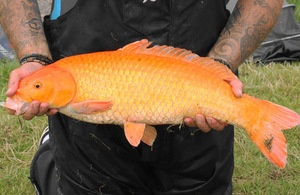
Koi should not be released into the wild
The invisible dangers to the local, indigenous population including native fish, are from disease and parasites and a potential for inter-breeding which could result in unwanted hybrid populations. ‘Saving’ one fish by giving it a new home, may jeopardise the biosecurity of those already there.
An article on the government website (see link below) contains advice from the Ornamental Aquatic Trade Association Ltd and the Environment Agency on what to do with unwanted stock.
It also confirms that pet fish could be totally unsuited for life in the wild and their release could also be an offence under the Animal Welfare Act 2006. For this reason, there are rules and regulations in place that are intended to safeguard clubs and fisheries as well as the native wildlife and its habitat. These include the following considerations:
- Fish movements are regulated by the Environment Agency.
- Clubs or fisheries wishing to move or introduce ANY fish, are required to register their fisheries with the Centre for Environment, Aquaculture and Fisheries Science (Cefas)
- If clubs or fisheries wish to keep non-native species at a venue, they must obtain a site permit from the Environment Agency which will confirm the species that can be kept. This process might also involve health checks on a sample fish before consent is given.
Terrapins (if spotted, report your sighting here: www.turtletally.co.uk) are listed among the restricted group of invasive non-native (alien) animals. These, and all sub-species, are named in a group that also includes Chinese Mitten crabs, Marbled crayfish, the Pumkinseed, Topmouth gudgeon and Striped eel catfish.
If you kept one of the listed species as ‘pets’ before they were listed, you’re able to retain them without a permit for the rest of its life. There are considerations in such an instance on the government website which also includes the full listing and guidance on what to do if, for example you didn’t realise you were in possession of a listed species.
Releasing a listed species into the wild could result in prosecution as could allowing it to breed.
Further Reading:
The Dangers of Releasing Ornamental Fish into the Wild (EA & Ornamental Aquatic Trade Assoc. Ltd)
Invasive non-native (alien) animal species: rules in England and Wales (Defra)
Terrapins (Canal & Rivers Trust)
Pet Code of Practice (Ornamentalfish.org)
Management
Once an invasive species has become established, it can be difficult to completely remove this species from a waterway. However, there are methods available to control the species to minimise its impact so considering where you are within a river catchment is important.
If you are a stillwater without an inflow/outflow to a water course, then management may be more straightforward. However, if the still water is linked to the floodplain, or if you lease a river stretch then you may want to consider whether there are populations that may be further upstream. To be the most effective, management should start at the upper most point to stop it reinvading spots downstream. This can be achieved through collaborative working with other partners in your area such as river trusts, wildlife trusts and other local action groups.
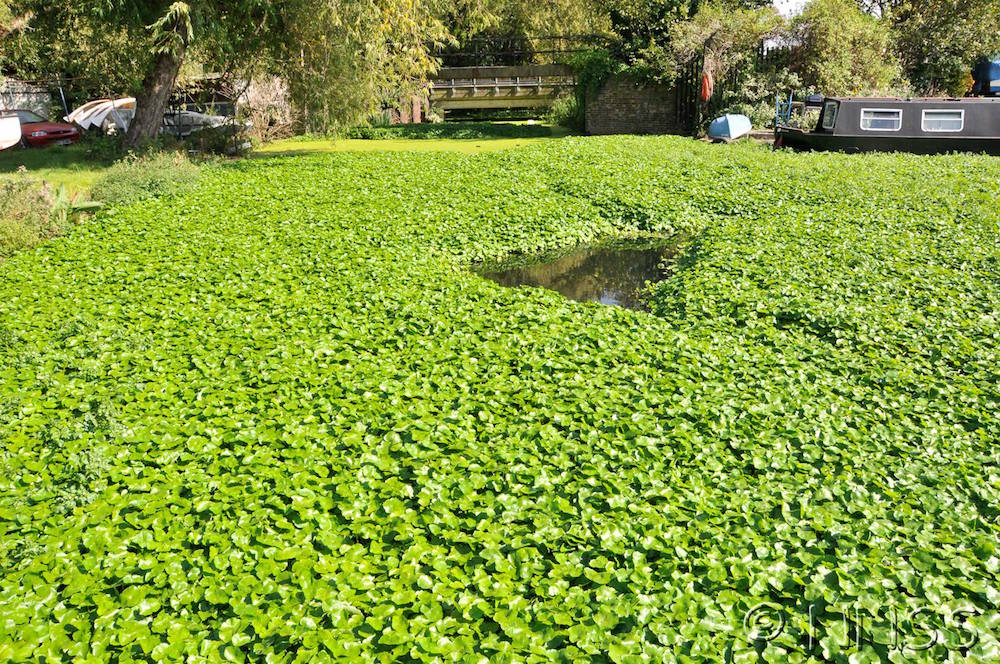
Floating Pennywort
The Angling Trust is part of the national GB Floating Pennywort Strategy which aims to coordinate resources to effectively manage floating pennywort. This includes support from government, canal and river trust, water companies, inland drainage boards and several recreational national governing bodies.
We have created a series of guides to provide to support to clubs and fisheries seeking to manage Floating Pennywort.
Factors to consider before undertaking management
Managing floating pennywort in flowing waters
Managing floating pennywort in still waters
Health and safety risk assessment
What to do after a removal event
Checklist to organise an event
Crayfish
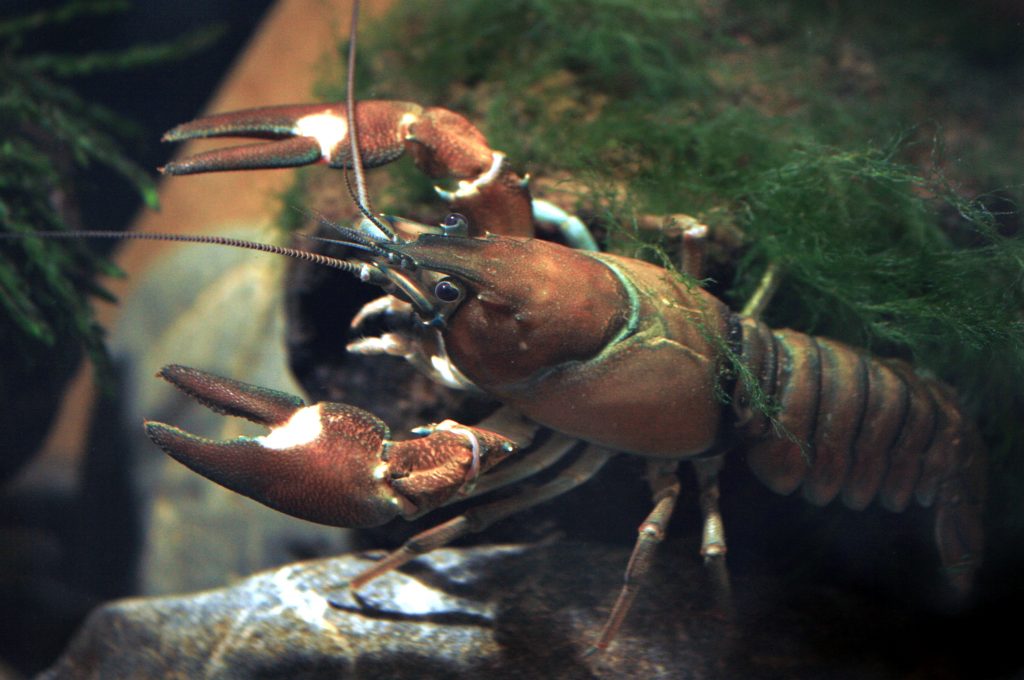
In 2019, the law on Signal crayfish in England changed to restrict activities around the keeping, release, transportation and selling of live Signals unless in accordance with a licence. The Angling Trust has produced a guide to outline trapping and the licences you need. Click on the image to download the guide.
Policy & Regulation
Invasive Alien Species Order
The Invasive Alien Species Regulation (1143/2014) came into force in 2015. This regulation focuses around actions that need to implemented by governments to reduce the spread of invasive species, improve early detection and rapid eradication and strengthen long term management. When the UK left the EU we retained this regulation across to become the ‘Invasive Alien Species Order’.
Within this, a list of high-risk invasive species called ‘Species of Special Concern’ has been created and continues to be reviews. Species on this list are subject to a series of restrictions including being banned from sale, breeding, and knowingly allowing to spread.
As well as managing species, there is a need to reduce the risk of spread of invasive species via pathways which are the routes through which invasive species are intentionally or accidentally moved between areas. Management of these pathways will tackle all of the invasive species spread via that route. Angling has been identified as a potential pathway.
The Angling Trust chaired the development of a GB Angling Pathway Action Plan. Alongside other partners, we use this plan to help protect fish and fishing from invasive species.
Keeping Invasive Fish Regulation
It is an offence to introduce and keep, controlled non-native fish or shellfish without a licence. More information here.
Wildlife Countryside Act
Further species are listed under the WCA 1981 under Section 14.